You can do this too with these nine steps
Know your audience
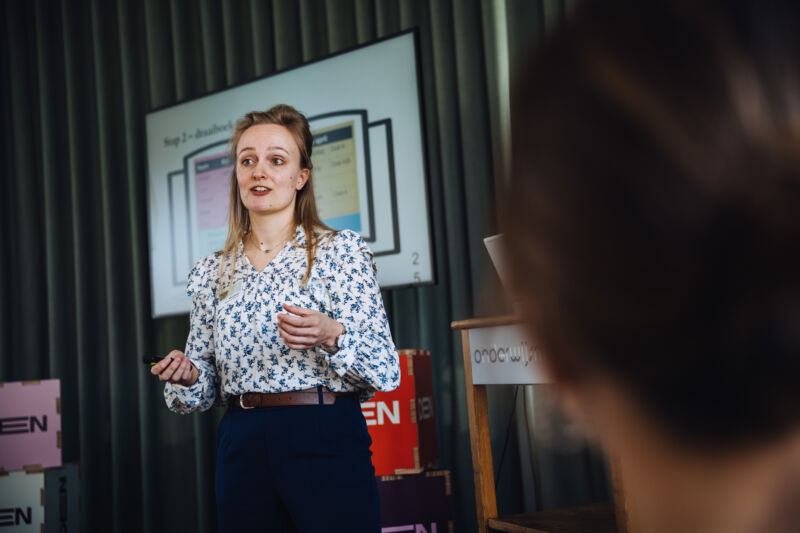
Inger: "As an advisor, I am aware of trends in education. They are rapidly becoming more flexible and personalized. Digitization is an important part of this. There is a need to make cultural education more digital."
Secure a budget
"But the Culture Menus I coordinated had limited digital offerings. So, I started creating it myself. Through ICO, the arts center where I worked, I applied for a grant from the Fund for Cultural Participation. If you try to create digital offerings from your current budget, chances are it won’t be sufficient because it’s not set up for this. You’ll either sacrifice quality or abandon the idea. That’s a shame. There’s a lot of funding available; you just need to know where to find it," says Inger.
Curious about which funds you can apply to for digital projects? Check out the funding guide.
Ignite the spark
Have a great idea? Start talking to people about it. "Find allies," advises Inger. "Try to gather the right people around you. For one of my projects, for example, I involved a school administrator. A highly passionate, charismatic man who was very enthusiastic. Someone like that can become a spokesperson for you. He can help convince others."
"Only one wall of the actual monastery remains standing. Digitally, you can bring it completely back to life so children can have adventures in it."
Know what you don’t know
"I am a digital immigrant", says Inger. "I grew up before the internet existed." She wanted to create something that would spark children’s curiosity, was fascinated by escape rooms popping up everywhere, and understood the power of storytelling. Inger: "From an existing project about a medieval monastery in Assen, I created a digital escape room. I wanted to show what the monastery looked like. Unfortunately, only one wall remains. This is too abstract for children. But with the help of technology, I could bring the monastery back to life digitally so children could walk through it."
Gather the right people around you
But how do you do that? Inger: "I can’t program, but Demi Tanalepy, a game expert from ICO’s Digital Art Factory, was eager to collaborate. I also involved the Drents Archive. They had a lot of experience with gaming in their projects. It gave me confidence that they supported my plan. Together, we wrote the scenes. Additionally, I set up a sounding board group with cultural experts and a teacher."
Collaboration provides more knowledge and advances your project. Read all our articles about collaboration.
Make the process visible
"A sounding board group is not only helpful because they provide feedback, but it also ensures you keep them informed about what you’re doing," says Inger. If you let people look in on the process, they can not only help you but also develop understanding. They’ll understand what’s taking so long."
Don’t fear resistance
"Always engage in conversation," advises Inger. "Don’t dismiss objections outright. Nothing is mandatory; just show what’s possible." And yes, it does require some investment. "But it yields so much," says Inger. "For Stichting Kunst en Cultuur, I developed a training program for art teachers on digital working. Some are afraid that the digital will replace sensory work, but no one says you can’t bring tangible materials into the classroom anymore. The digital provides a wonderful addition."
"I believe we should allow ourselves to experiment. If you have to get everything right the first time, you set the bar very high for yourself."
Experiment
"I tested the escape room endlessly. All the students were ready behind a laptop, we started the game, and all the laptops went black. They couldn’t handle it at all. We had to come up with something else. It’s sometimes frustrating, but I also believe we should allow ourselves to experiment. If you have to get everything right the first time, you set the bar very high for yourself."
And go!
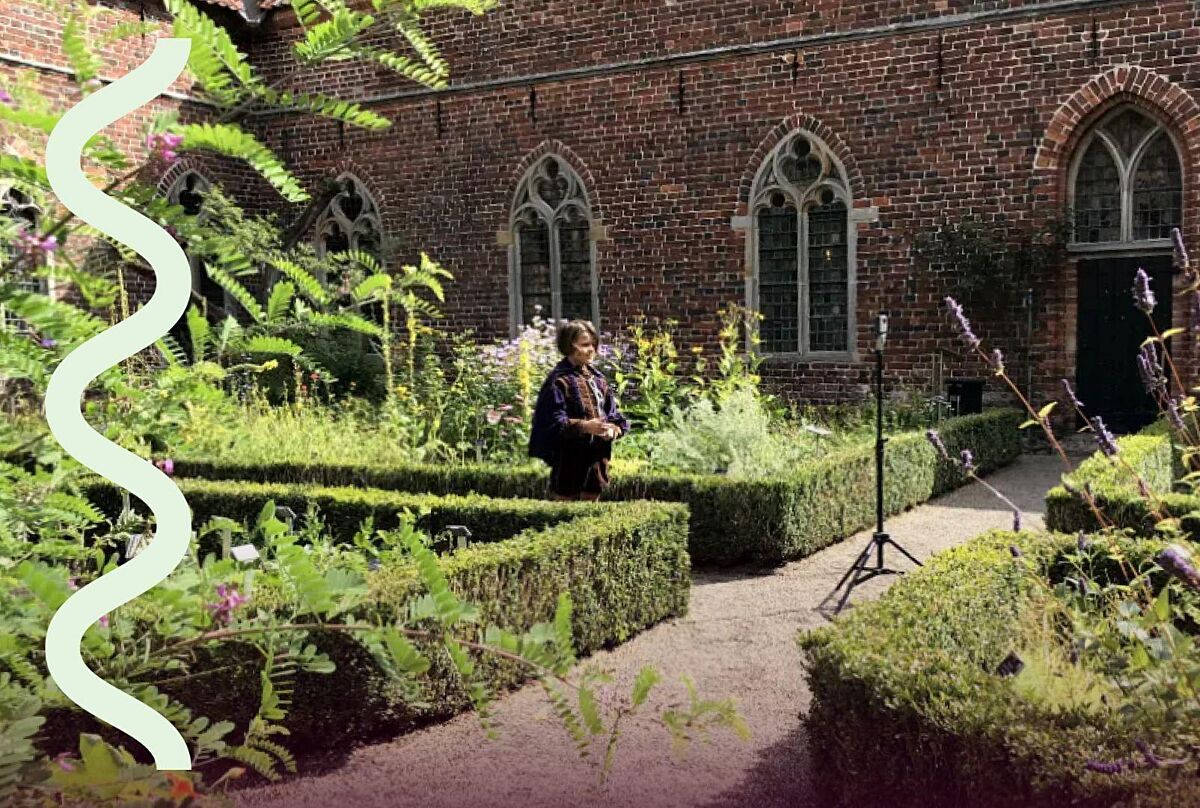
Inger: "When I discovered that there’s also a beautiful monastery in Ter Apel that is still intact, I just called them to ask if we could film there. They agreed. That’s how we brought the monastery to life in the escape room. The actors are my daughter, one of her friends, and myself."
The escape room is a great success. It connects with the students’ culture, they can explore it themselves, and they learn to investigate and process information. "And I’ve learned a lot from it myself," says Inger.
Inger van Til is the owner of Cultuurkracht!, an agency for cultural (education) projects. She works on behalf of Stichting Kunst en Cultuur, ICO, partner in arts and culture, Hanze University of Applied Sciences Groningen, Gebied B, and Keunstwurk Friesland.

More articles per topic