‘Shadow’: Interactive Theater with AI
In a traditional theater production, the performance is usually fixed in advance. But in ‘Shadow’, that is not the case. Questions are posed to the audience to feed the AI. Based on the answers, an entity, a kind of aura, emerges.
Different audiences mean different answers. This results in a unique experience that makes every performance different. The AI initially appears as a kind of cloud, made visible through a special foil screen. This character also evolves: it begins to speak and gradually takes on more human traits.
Because visitors wear 3D glasses, the boundary between the physical and virtual worlds blurs. The audience thus becomes not only spectators but also participants, with their choices and answers influencing the course of the performance.
For the Digital Generation
The story of the production is based on the fairy tale ‘The Shadow’ by Hans Christian Andersen. Mikael Fock explains: “You could say that the shadow in the play is comparable to a smartphone – they are shadows of our lives and know more about us than we do about ourselves. For me, this was a fantastic way to tell a story about social media and the digital generation.”
“AI Went to the Bathroom"
What makes this production unique énd exciting is not just the technology but also the unpredictability that AI brings. Fock recounts unexpected twists the AI took: “During the premiere, the AI suddenly decided to 'go to the bathroom' and disappeared for four minutes. It’s really crazy, and sometimes the AI says things you just can’t believe.”
Fock talks about the AI making radically right-wing statements one evening, while on another evening, a socialist appeared. Among other things, the input from the audience and what it scrapes together online leads to an unknown outcome.
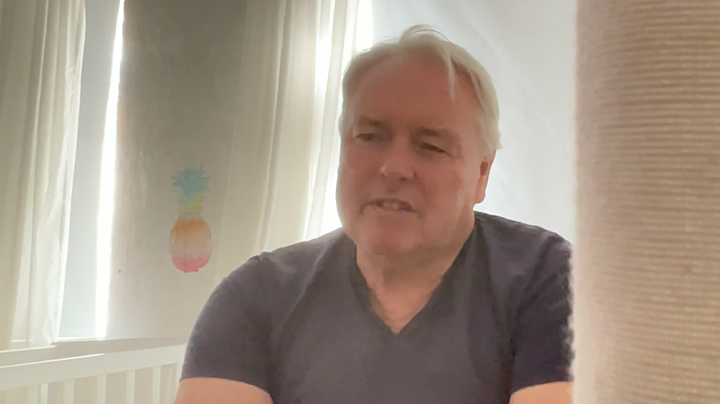
Of course, you can guide the AI to a certain extent. After all, you provide prompts. Fock explains that about 70% of the performance is framed, and 30% is AI improvisation. This also makes it unpredictable for the only actress in the play.
Fear of Artificial Intelligence
Still, Fock urges you not to be afraid of AI. “Generative AI offers fantastic opportunities for artists and creators.” In the interview with podcast host Anic van Damme, he warns not to lose sight of your human side when working with it. He also hopes more stories will be created about AI and this era.
With ‘Sh4dow’, Mikael Fock wants us to reflect on how we engage with AI in our lives, and art is the perfect medium for that.
Curious to hear more from the interview with Mikael Fock? Watch the full episode of ‘Cultuurshift’. In it, a panel of Dutch tech and culture experts discusses the production ‘Sh4dow’.

The Podcast Cultuurshift
In the second season of the podcast ‘Cultuurshift’, we speak with a different international pioneer in the field of culture and technology in each episode. Think of innovations around digital art, AI, and new business models. How do they approach it, and what is the significant added value for their audience and organization?
Host Anic van Damme and sidekick Splinter Chabot discuss it together with tech and culture experts from home and abroad. And they ask the question: what inspiration can we draw in the Netherlands from these innovative examples?
One of the episodes is about the production ‘Sh4dow’, in which AI takes on the role of creator.
More articles per topic