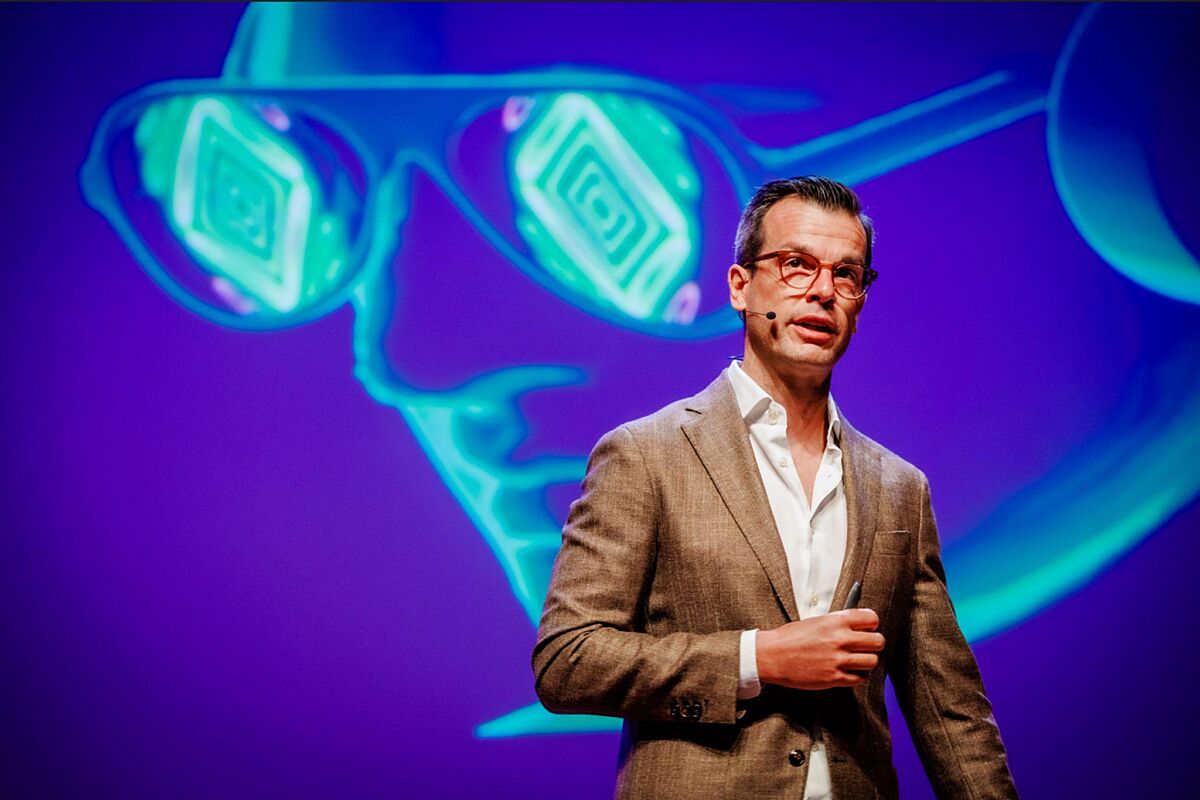
DEN saw Carlo van Lienden at the Congress for Venues, Festivals, and Events, where he spoke about the metaverse. We were inspired and invited him for an interview about the audience of the future. What do they look like, and how can cultural institutions respond to them?
Resistance: where do you start?
“Do I have to delve into this as well?” Van Lienden describes the resistance he feels towards new digital developments. Resistance that everyone undoubtedly experiences. Digital transformation is something you have to deal with, but where do you start?
“Congratulations! The fact that you're asking that question means you're taking the first step,” Van Lienden replies when we ask him that question.
“Research the needs of your audience and those of new generations.”
“Overcome the resistance and start close to home. Get to know your current audience, but also the people who are no longer part of your audience. Research the needs of past audiences and new generations: what do they want to see? How do they want to see it? You can do this by collecting and analyzing data. Or organize panel discussions!”

What characterizes the audience of the future?
Carlo shares his vision of the future and new generations. “The internet and online happened to us. I grew up without the internet. Generation Z and Alpha know no different. Because they grow up with phones, they also adapt to the way they receive information through them: short and fast.
Additionally, you also see social power dynamics changing. Generation Z is activist and values having a say in decisions.
“Let your audience have a say. Co-creation and participation are becoming increasingly important.”
“The organization of the future will be fully democratic and 100% transparent,” Van Lienden speculates. Organizations will be less centrally governed. Stakeholders and employees will have more digital voting rights. “This is speculation,” he emphasizes, “but the trend is clear, especially among newer generations.”
Want to learn more about Gen Z? Get to know the new generation of young people and learn what drives them in this article.
How can you respond to this?
Carlo van Lienden begins with an example: “John Quinn, editor-in-chief of ‘USA Today,’ was ridiculed when the newspaper was founded in 1982. At that time, all newspapers were seeing their circulation decline due to the rise of television. Newspapers back then were large with lots of text and few images, no longer catering to what readers wanted at the time.
“However, Quinn was inspired by the new medium and designed his newspaper the way television shared information: short articles, color photos, and entertainment. The newspaper became a success.” USA Today is still the largest newspaper in the United States.
“The audience wants to be part of the story and take control.”
Focus on interaction
Having just a new medium is not enough. The way young people receive and process information is also different. “If you're used to seeing four or five Instagram stories in a minute, someone talking for ten minutes on television feels like a feature film.” Keep this in mind when creating content.
Additionally, co-creation is important. “Look closely at the gaming world. Storytelling is key. The audience wants to be part of the story and take control. Interactivity is crucial for the experience.”
“Both online and in physical spaces, more needs to happen than just broadcasting,” Van Lienden emphasizes.

Trends
What trends will we face in the coming years? Carlo van Lienden mentions three important elements: interactivity, storytelling, and experience. “The audience wants to participate or emulate. Think of viral dance videos.”
He also points to the gaming industry as a major example. “They are leading when it comes to digital transformation and reaching new generations.”
What can you do now?
Many organizations are stuck in a four-year subsidy cycle. They have to write multi-year plans, while agility and speed are precisely what are needed to respond to a changing society.
Carlo van Lienden is clear about this: “Make sure you don't miss the boat, but keep it simple. First, find the energy and courage to start. That is the first step. Read books or articles about new media or Generation Z. And discuss it with colleagues.”
Carlo van Lienden is a former editor-in-chief of RTL Boulevard and RTL Late Night. He is currently the owner of content studio Foresee and a public speaker on the metaverse, storytelling, and new media. He focuses on what the audience wants to see, how to present it, and how it resonates. He also regularly researches new developments in the online world. “Because that's where the audience is going.”
More articles per topic